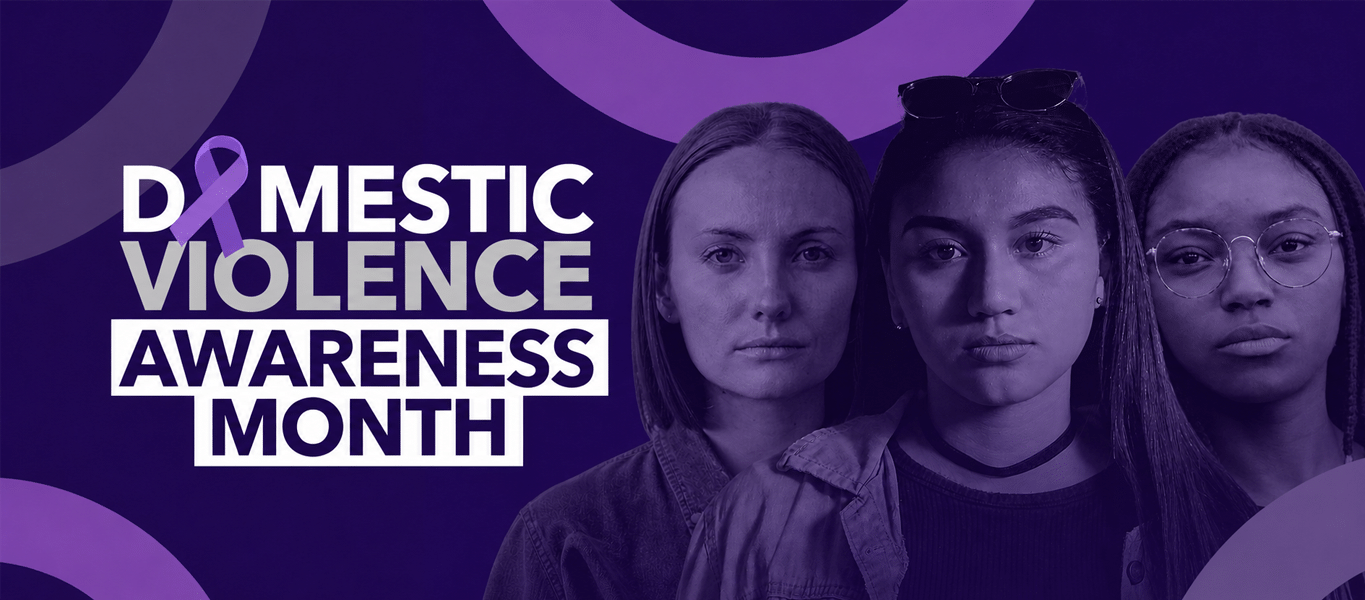
Fostering Hope, Safety & Healing
Every October, Domestic Violence Awareness Month (DVAM) calls upon us to raise awareness about domestic violence in all its forms, honor the lives lost, and renew our commitment to justice and healing for survivors.
Domestic violence often hides behind silence and stigma — impacting people across every community. It may even affect someone you know. Join us and take time to connect with friends and family, reflect on your own relationships, and share resources that can bring hope and safety to others.
Recognizing Domestic Violence
Domestic violence can affect anyone — regardless of age, gender identity, race, ethnicity, sexual orientation, economic status, education level, or religion. It is a recurring, deliberate pattern of behaviors used by a current or former intimate partner to gain and maintain power and control in a relationship.
Domestic violence takes many forms and may involve patterns of behaviors intended to intimidate, manipulate, humiliate, isolate, frighten, coerce, or threaten someone. It may include emotional, psychological, physical, sexual, financial, and spiritual abuse.
Abuse often begins gradually and escalates over time. Survivors may feel confused, overwhelmed, or trapped by ongoing coercion and isolation, which can make it difficult to recognize the abuse or seek support. The trauma it causes can impact each survivor’s mental, emotional, and physical well-being.
Every survivor’s journey is different. Healing and recovery are possible with compassion and support.
If you or someone you know needs help, call our 24-hour confidential crisis hotline at 619.234.3164.
Community Need
Domestic violence is one of the most pervasive threats to safety and well-being in our community:
- 1 in 4 women and 1 in 7 men have experienced severe physical violence by an intimate partner (Centers for Disease Control and Prevention).
- More than half (54%) of transgender and non-binary people experience intimate partner violence in their lifetime (National Center for Transgender Equality).
- 99% of domestic violence survivors experience financial abuse, including forced job loss, coerced debt, and damaged credit (The Allstate Foundation).
- 63% of adult Californians are personally affected by domestic violence, either as a survivor or through a family member or friend (Blue Shield of California Foundation).
- In San Diego County, law enforcement received 14,979 domestic violence calls in 2025, although most abuse is never reported due to fear and intimidation.
Week Without Violence
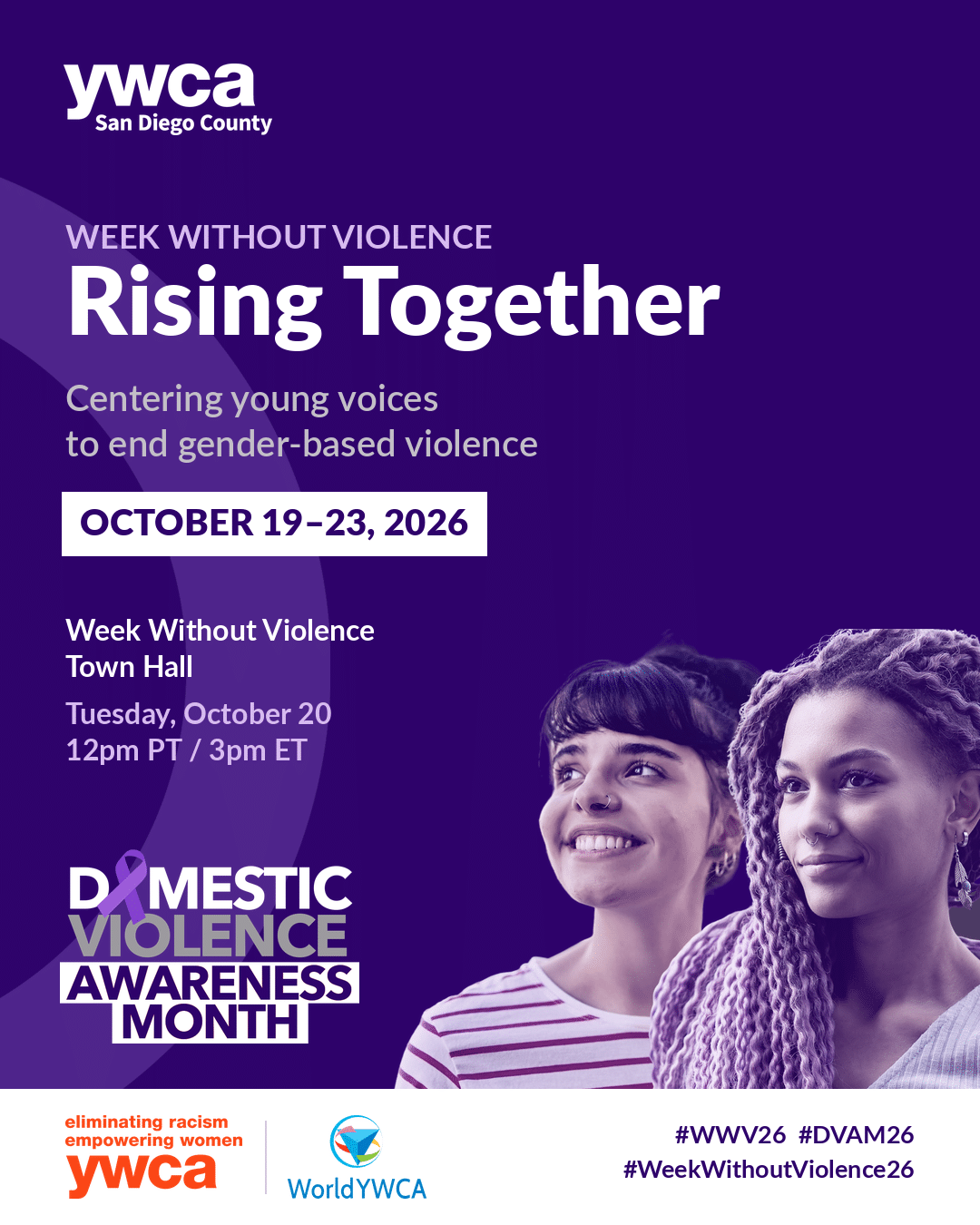
Rising Together
Week Without Violence brings YWCAs across the country together to raise awareness, inspire action, and advance solutions to end gender-based violence. This year’s theme, Rising Together: Centering Young Voices to End Gender-Based Violence, explores what young people need not only to survive violence, but to heal, rebuild, and thrive.
The campaign centers on Watch You Rise, a documentary directed by Isabella Grace Cohn. As a young filmmaker comes of age, she uncovers stories of sexual assault experienced by her mother, her peers, and eventually herself, and explores sex, power, consent, and new possibilities for healing.
Week Without Violence Town Hall: On Tuesday, October 20, at 12 p.m. PT / 3 p.m. ET, YWCA USA will host a free virtual town hall featuring clips from the film, a live conversation with the filmmakers, and a roundtable with young leaders. Register here.
Content note: the film and discussion address sexual violence.
How You Can Take Action
This Domestic Violence Awareness Month, join us in breaking the silence and standing with survivors. Here are some meaningful ways to get involved:
- Start the conversation — Talk with friends, family, and neighbors to raise awareness and reduce stigma.
- Learn the signs — Understand the warning signs of abuse and learn more about your options.
- Provide support — Offer compassion, listen without judgment, respect survivors’ decisions, and learn how to help someone.
- Give to make a difference — Make an online gift to support YWCA’s life-changing solutions for adult and child survivors.
- Advocate for change — Contact your legislators to support survivor-centered policies that expand protections and resources.
- Wear purple — Show solidarity by wearing purple, the color of domestic violence awareness. Share a selfie with hashtags #DVAM26 and #DomesticViolenceAwarenessMonth!
Together, We Can End Domestic Violence
Domestic violence persists in silence — but together, we can raise awareness, support survivors, and create pathways to safety and healing.
Your voice matters. Your action matters. And your support matters.
Learn more, share resources, and stand with survivors this October.